





Practical learning in data Science, machine learning, and AI. Gain hands-on experience with Python, SQL, statistics, Tableau, and Power BI through real-world projects and expert-led sessions. Data Science Training Course in Delhi at 3RI Technologies designed for students, professionals, and career switchers, the program helps develop job-ready skills for growing opportunities in Data Science and Analytics.
You’ll get WhatsApp confirmation and email with joining link / campus details.
Talk to a counselor in 5 minutes
Having trouble? Call us at 8308103366 or Chat on WhatsApp.
Key Features
Course Duration : 8 Weeks
Live Projects : 1
Online Live Training
EMI Option Available
Certification & Job Assistance
24 x 7 Lifetime Support
Our Industry Expert Trainer
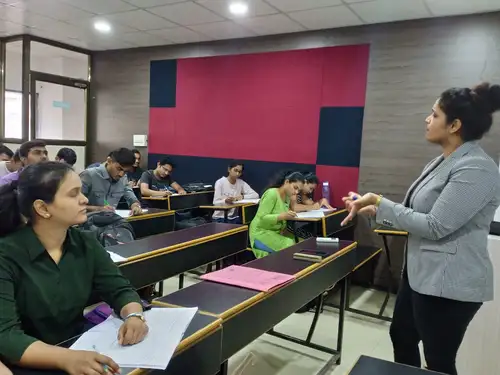
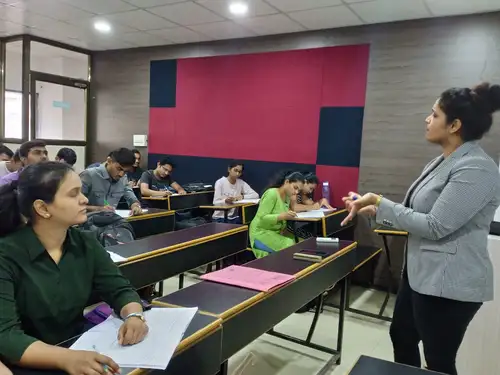
We are a team of 10+ Years of Industry Experienced Trainers, who conduct the training with real-time scenarios.
The Global Certified Trainers are Excellent in knowledge and highly professionals.
The Trainers follow the Project-Based Learning Method in the Interactive sessions.
Are you aiming to build a successful career in data science? 3RI Technologies offers an industry-driven data scientist course in Delhi that prepares you for real-world challenges. Our comprehensive data science training in Delhi is designed for students, freshers, working professionals, and tech enthusiasts who aspire to master core data science skills like Python programming, machine learning, deep learning, data visualization, and big data analytics.
At 3RI Technologies, we focus on practical, hands-on learning paired with in-depth theoretical concepts, ensuring you gain a complete understanding of how data science transforms industries. Our expert trainers bring real-world insights and project experience into the classroom, helping you stay aligned with current market trends.
If you’re searching for trusted data science training Delhi, our curriculum is tailored to meet industry standards with real-time projects, case studies, and one-on-one mentoring support. The training will help you confidently build, analyze, and deploy predictive models.
Whether you are transitioning careers, upgrading your skill set, or starting fresh, our data scientist course in Delhi equips you with the knowledge, tools, and experience needed to thrive in today’s competitive job market. Enroll today and future-proof your career with one of Delhi’s leading data science training programs!
Data Science Course features
Prerequisites
Basic knowledge of Python programming language, SQL, and files (MS Excel, CSV, etc.) with knowledge about algebra and geometry.
Course Duration
40 hours, i.e., 8-9 weeks approx.
Who all can apply for this course?
Skills Required
Decade Years Legacy of Excellence | Multiple Cities | Manifold Campuses | Global Career Offers
1. Fundamentals of Data Science and Mathematical statistics
● Introduction to Data Science
● Need of Data Science
● BigData and Data Science
● Data Science and machine learning
● Data Science Life Cycle
● Data Science Platform
● Data Science Use Cases
● Skill Required for Data Science
2. Mathematics For Data Science
● Linear Algebra-Matrices
o Zero
o One
o Identify
o Diagonal
o Column
o Row
o Operations
3. Statistics for Data Science
● Structured and unstructured
● Measures of central tendency and dispersion
● Empirical Formula
● Confidence Interval
● Central Limit Theorem
4. Probability and Probability Distributions
● Probability Theory
● Conditional Probability
● Data Distribution
● Normal Distribution
● Binomial Distribution
5. Tests of Hypothesis
● Large Sample Test vs Small Sample Test
● One Sample: Testing Population Mean
● Hypothesis in One Sample z-test
● Two Sample: Testing Population Mean
● One Sample t-test – Two Sample t-test
● Chi-Square test
1. Using a Spread sheet
● What is Excel?
● Why Use Excel?
● Excel Overview
● Excel Ranges, Selection of Ranges
● Excel Fill, Fill Copies, Fill Sequences, Sequence of Dates
● Excel adds, move, and delete cells
● Excel Formulas
● Relative and Absolute References
2. Functions
● SUM
● AVERAGE
● COUNT
● MAX & MIN
● RANDBETWEEN
● TRIM
● LEN
● CONCATENATE
● TODAY & NOW
3. Advanced Functions
● Excel IF Function
● Excel If Function with Calculations
● How to use COUNT, COUNTIF, and COUNTIFS Function?
4. Data Visualization
● Excel Data Analysis – Data Visualization
● Visualizing Data with Charts
● Chart Elements and Chart Styles
● Data Labels
● Quick Layout
● An Introduction to RDBMS & SQL
● Data Retrieval with SQL
● Pattern matching with wildcards
● Basics of sorting
● Order by clause
● Aggregate functions
● Group by clause
● Having clause
● Nested queries
● Inner join
● Multi join
● Outer join
● Adding and Deleting columns
● Changing column name and Data Type
● Creating Table from existing Table
● Changing Constraints Foreign key
1. An Introduction to Python
● Why Python , its Unique Feature and where to use it?
● Python environment Setup/shell
● Python Identifiers, Keywords
2. Conditional Statement ,Loops and File Handling
● Python Data Types and Variable
● Condition and Loops in Python
● Decorators
● Python Files and Directories manipulations
3. Python Core Objects and Functions
● String/List/Dictionaries/Tuple
● Python built in function
● Python user defined functions
4. Introduction to NumPy
● Array Operations
● Arrays Functions
● Array Mathematics
o Mean
o Standard Deviation
o Max
o Min
● Array Manipulation
o Reshaping
o Resizing
● Random function
● Transpose
5. Data Manipulation with Pandas
● Data Frames
● Series
● Creating Pandas DataFrame
● Selection in DFs
● Data Describe
● Data info
● Retrieving in DFs
● Reshaping the DFs – Pivot
● Combining DFs
o Merge
o Concatenation
6. Visualization with Matplotlib
● Matplotlib Installation
● Matplotlib Basic Plots & it’ s Containers
● Matplotlib components and properties
● Scatter plots
● Histograms
● Bar Graphs
● Pie Charts
● Box Plots
7. SciPy
● Hypothesis Testing using Scipy
● Shapiro Test
● Spearmaman Test
● T-Test of Independents
● Chi-Square Test
1. Exploratory Data Analysis
● Data Exploration
● Missing Value handling
● Outliers Handling
● Feature Engineering
● Train-Test Split
● Standard Scaler
● Min-Max Scaler
● Data Pre-processing
● Resampling
o Up-Sampling
o Down-Sampling
2. Machine Learning: Supervised Algorithms
● Introduction to Machine Learning
● Linear Regression
● Model Evaluation and performance
o R2 Score and Adjusted R2 Score
o Mean Squared Error
o Root Mean Squared Error
● Gradient Descent
● Logistic Regression
3. Model Evaluation and performance
● Accuracy ,Precision
● Recall
● F1 Score
● Confusion Matrix
● Classification Report
● K-Fold Cross Validation
● ROC, AUC etc…
● K-Nearest Neighbor Algorithm
● Decision Tress
● Random Forest
● Support Vector Machines
● Hyper parameter tuning
4. Machine Learning: Unsupervised Learning Algorithms
● Similarity Measures
● K-Means Clustering
o Elbow Method
5. Ensemble algorithms
● Bagging
● Boosting
● Principal Components Analysis
1. Artificial Intelligence
● An Introduction to Artificial Intelligence
● History of Artificial Intelligence
● Future and Market Trends in AI
2. Natural Language Processing
● Tokenization
● Part of Speech Tagging (POS Tagging)
● Named Entity Recognition
● Semantic Analysis
● Sentiment Analysis
3. Artificial Neural Network
● Understanding Artificial Neural Network
● The Activation Function ReLU and Softmax
● Building an ANN
● Evaluation the ANN
4. Conventional Neural Networks
● CNN Intuition
● Convolution Operation
● Filtering operation
● Padding on image
● Pooling Layer
o Max Pooling
● Fully Connected Dense Layer
● Building a CNN
● Evaluating the CNN
5. Recurrent Neural Network
● RNN Intuition
● Building an RNN
● Evaluating the RNN
● LSTM in RNN
6. Time Series Data
● Introduction to Time series data
● Data cleaning in time series
● Pre-Processing Time-series Data
● Prediction in Time Series using LSTM
● Prediction in Time Series using ARIMA
1. Foundations of Artificial Intelligence
2. Introduction to Generative AI
3. Prompt Engineering & Task Automation
1. Introduction to Git & Distributed Version Control
2. Life Cycle
3. Create clone & commit Operations
4. Push & Update Operations
5. Stash, Move, Rename & Delete Operations.
Module 1: Introduction to Power BI
1. Introduction to Business Intelligence & Power BI
● Need for Business Intelligence
● Evolution of Power BI
● What is Power BI? Features & Components
2. Power BI Ecosystem
● Power BI Desktop
● Power BI Service
● Power BI Mobile
● Power BI Report Builder vs Paginated Reports
3. Installation & Setup
● Downloading Power BI Desktop
● Installing and configuring settings
● Exploring the start screen and workspace
4. Power BI Interface Overview
● Ribbon and Navigation Pane
● Report, Data, and Model views
● Fields Pane and Visualizations Pane
5. Supported Data Sources
● Excel, CSV, SQL Server, Web APIs
● Cloud sources: Azure, SharePoint, OneDrive
● Folder as a data source
Module 2: Data Loading and Transformation with Power Query
1. Connecting to Data
● Import vs DirectQuery
● Loading from Excel, CSV, Web, SQL Server
● Data Preview and Load options
2. Column-Level Transformations
● Split column by delimiter/position
● Merge columns
● Change data types
● Rename columns
● Add column from examples
3. Row-Level Transformations
● Filter rows based on conditions
● Remove or keep rows
● Sorting data
● Grouping data with aggregations
4. Data Cleaning & Shaping
● Handling missing values: Replace, Fill up/down
● Remove duplicates
● Pivot and Unpivot operations
● Creating conditional columns
Module 3: Visualizations in Power BI
1. Core Visual Elements
● Bar/Column charts, Line charts, Pie/Donut charts
● Matrix and Table visuals
● Cards and Multi-row cards
● Maps: Shape map, Filled map
2. Slicers and Filters
● Basic Slicers
● Date and Range slicers
● Sync Slicers across pages
● Drill-down and Drill-through
3. Formatting and Interactions
● Title, label, legend customization
● Tooltips, data labels, axis formatting
● Visual interaction controls
● Custom themes and color palettes
Project Work and Case Studies ML
❖ Profit prediction on Startups data using Multiple Linear Regression.
❖ Diabetes, Pre-Diabetes and Non-Diabetes Classification using Multiclass
❖ Logistic Regression
❖ Spam Mail Detection using Gradient Boost ,XGBoost and Random Forest.
❖ Drug classifications using K-Nearest Neighbours
❖ Loan Defaulter Classification using SVM
❖ Customer Grouping using Kmeans and Agglomerative Clustering
❖ Product associations using Association rule mining.
Capstone Project 1 : Delivery Duration Prediction
Capstone Project 2 : Machine Failure Prediction
Project Work and Case Studies AI
❖ PowerPlant Energy predictions using ANN.
❖ CIFAR10 Image Classification using CNN
❖ Handwritten Digit Image classification using CNN.
❖ IMDB Movie reviews sentiment analysis using RNN
❖ AIR Passenger Prediction using ARIMA Time Series Analysis
❖ Next Word Generator using NLP and LSTM Text Generation
Capstone Project : Delivery Duration Prediction
Project Work and Case Studies Power BI
❖ Project: Retail Sales Dashboard
● Sales vs Target KPIs
● Product category and region-wise breakdown
❖ Project: HR Analytics Dashboard
● Attrition rate, hiring trends
● Department-level analysis
❖ Project: Financial Performance Report
● P & L view, trend analysis, YoY comparison
❖ Project: Supply Chain and Inventory Dashboard
● Stock availability
● Supplier performance tracking
Project Domains: Finance
● The insurance company wants to decide on the premium using various
parameters of the client.
● It’ s an important problem to keep the clients and attract new ones.
By completing this Project you will learn:
● How to collect data?, how to justify the right features? , Which ML / DL model is
best in this situation? How much data is enough?
● How to have CI/CD in the project?
● How to do Deployment of Project to cloud?
Project Domain: Image Processing in Health care
● A hospital wants to automate the Detection of pneumonia in X-rays using image processing.
By completing this Project you will learn:
● How to handle image data? How to preprocess and augment image data?
● How to choose the right model for the image process?
● How to apply transfer learning in image processing?
● How to do incremental learning & CI/CD in the project?
● How to do Deployment of Project to cloud?
Natural Language Processing
● One of the companies wants to automate applicant’ s level in English
communication.
● Create a ML/DL model for this task.
By completing this Project you will learn:
● How do convert text to the right representation?
● How to preprocess text data? How to select the right ML/DL model for text data?
● How to do transfer learning in Text Analytics?
● How to do CI/CD in a text analytics project? How to do Deployment of Project to cloud?
Mechanical
● A mechanical company wants to perform predictive maintenance of engineparts.
● This enables the company to efficiently change parts before the machine fails.
By completing this Project you will learn:
● How to handle time-series data?
● How to preprocess time series data?
● How to create ML/DL model for Time-series Data?
● How to do CI/CD in a text analytics project?
● How to do Deployment of Project to cloud?
Sales / Demand Forecasting
● Predict the sales/demand of a product of a company.
● Sales / Demand forecasting of the product will help the company efficiently manage the resources.
● Create a ML/DL model for this problem.
By completing this Project you will learn:
● How to handle time-series data?
● How to preprocess time series data?
● How to create ML/DL model for Time-series Data?
● How to do CI/CD in a text analytics project? How to do Deployment of Project to cloud?




Industry Projects
Learn through real-life industry projects sponsored by top companies across industries
Dedicated Industry Experts Mentors
Receive 1:1 career counselling sessions & mock interviews with hiring managers. Further your career with our 300+ hiring partners.


Talk to a counselor in 5 minutes
Having trouble? Call us at 8308103366 or Chat on WhatsApp.





What our students talks about us. If you were student of 3RI and wants to share your thought about us, kindly mail or call us.
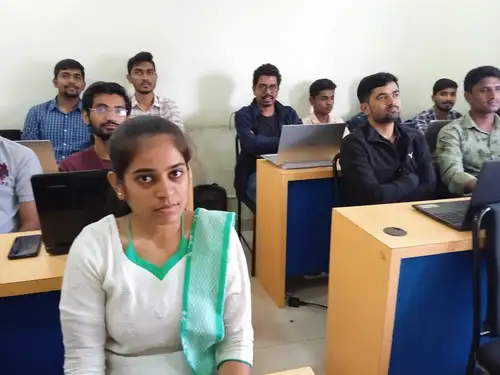
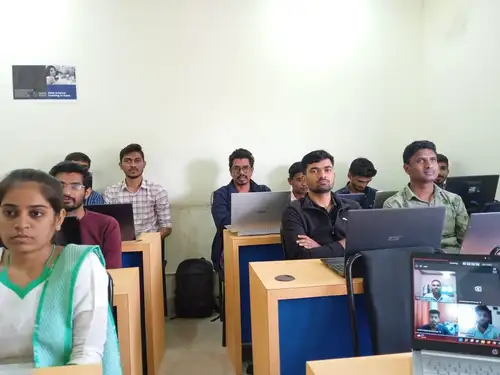
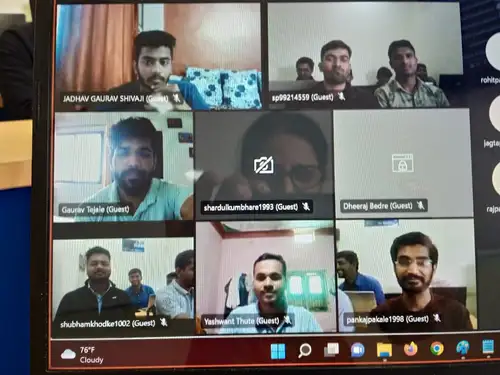



Learn the way industry wants it…
Personalized upskilling roadmap in a 15 – minute expert call
University & Industry Recognized Programs
No spam | One call only | Free resume review after your call